
Restore Professional Autonomy: Empower our Young Doctors to Care

Dr Gemma Neil (CTF) explores the meaning of person-centred care and why it is important
Dr. Wen Wang tackles NHS Workforce Retention Crisis at Westminster

At a high-level parliamentary roundtable on December 8, Dr. Wen Wang raised the quantitative flexible labour practices crippling the NHS.
BMJ Response: The Systematic Erosion of Medical Professionalism: A Global Crisis

The BMJ publishes a response by Dr Wen Wang to the article ‘What is society doing to young doctors? by Iona Heath and Sergio Minue
Securing a Training Post Straight After Foundation Training

Securing a training post in today’s NHS has become an increasingly demanding challenge, with competition rising and pressure mounting on resident doctors. In a system where stability often feels elusive and opportunities seem scarce, progressing from foundation training to the next stage demands persistence, reflection, and a steady sense of determination.
Resident Doctor Perspective: Learn Yourself to Make Progression

I remember being a medical student and hearing various stories from peers about plans for the future; “I’ve always wanted to be a Neurosurgeon” or “It’s important to start thinking about what you need for specialty applications” etc, etc. It’s great to have an idea of what you want to strive for, but it can feel a bit overwhelming if at that stage, you’re not quite so sure.
Foundation Year Doctors: Succeed by Learning When to Say No

Congratulations on qualifying as a doctor! You will be faced with many new experiences and challenges in your journey as a resident doctor. This could seem exciting but also daunting. You are not alone.
AI is beating doctors at empathy – because we’ve turned doctors into robots

Artificial intelligence has mastered chess, art and medical diagnosis. Now it’s apparently beating doctors at something we thought was uniquely human: empathy.
A recent review published in the British Medical Bulletin analysed 15 studies comparing AI-written responses with those from human healthcare professionals. Blinded researchers then rated these responses for empathy using validated assessment tools. The results were startling: AI responses were rated as more empathic in 13 out of 15 studies – 87% of the time.
Planning Ahead to Progress

As resident doctors, it can sometimes feel like there’s too much to do, causing us to lose sight of our aims or fail to explore them. I want to highlight the importance of planning ahead—not only to increase personal and work satisfaction but also to create opportunities and avoid having our path chosen for us.
Resident doctors: acting like a leader to become a leader
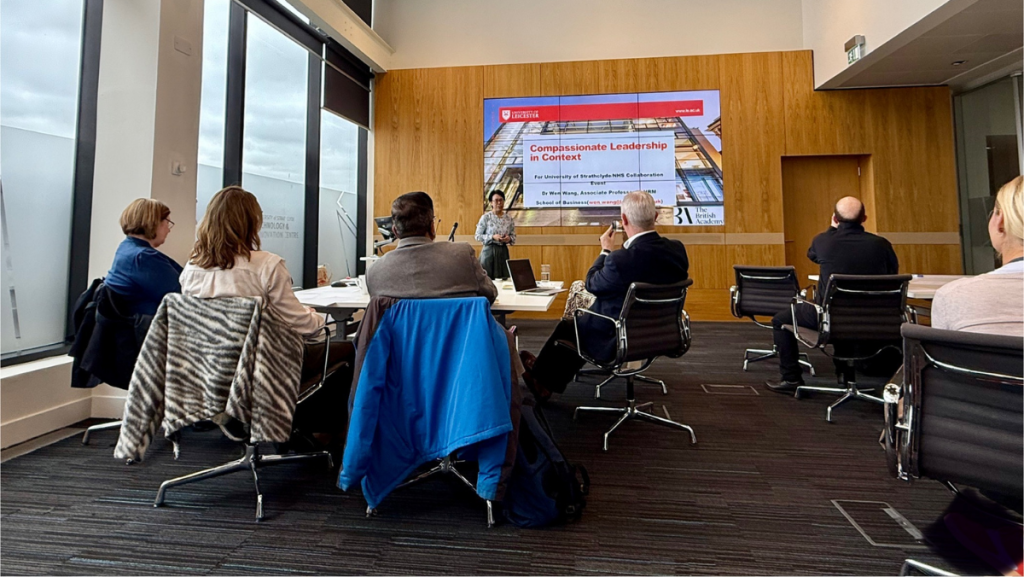
We were invited to share our research with NHS professionals in Scotland at the University of Strathclyde, proposing the 3Rs (responsiveness, relationship and recognition) for leaders to demonstrate compassionate leadership in context of resident doctors’ retention.
Written evidence to the national medical training review in 2025

In view of resident doctors’ exodus crisis and challenges to ensure training quality, the NHS England launched the national medical training review in April 2025, our evidence was accepted.